• Who We Are
    • Our Mission
    • Meet Our Staff
    • Meet Our Board
    • The Alaska Center Education Fund
  • Our Programs
    • Electing Leaders
      • Endorsements
    • Climate & Clean Energy
      • Clean Energy Stories
    • Salmon & Clean Water
  • Stay Connected
    • Hot Takes in a Cold Place
    • Become a Volunteer
    • Email Sign Up
    • Events
    • Careers
    • Ways to Give
    • Contact Us
  • Donate
  • Menu Menu

RANKED-CHOICE VOTING IS HERE!

July 26, 2022/in News

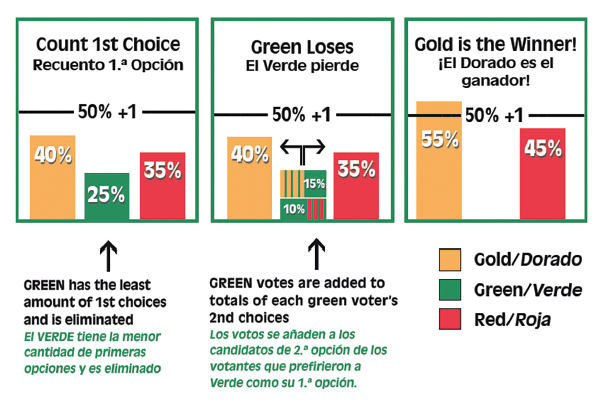
[cs_content][cs_element_section _id=”1″ ][cs_element_layout_row _id=”2″ ][cs_element_layout_column _id=”3″ ][cs_element_text _id=”4″ ][cs_content_seo]In 2020, Alaskans voted to approve a new voting system for statewide elections. Starting this year, we will use a system that combines an open primary with ranked-choice voting. This means that the four candidates with the most support will advance to the general election, regardless of their political party. Voters will then rank candidates in order of their preference, from first to last.

In the special election, the ranked-choice voting system will be used for the first time on August 16th, 2022, to fill former Rep. Don Young’s seat in the House of Representatives. The open primary in June narrowed the field of primary candidates down to four: Sarah Palin, Nick Begich, Mary Peltola, and Al Gross, who recently dropped out of the race. At the same time, they rank candidates for the special election, voters will also choose one primary candidate to advance to the general election for the permanent House position.

After voters make their choices on August 16th, their first-place choices will be tallied. If no candidate gets over 50% of the votes in the first round, the least popular candidate will be eliminated, and the votes for them reassigned to their voters’ second-choice picks. This process will continue until one candidate has over half of the votes. While it is not required to rank all four (or, in this case, three) candidates, it is recommended because it means that your voice can be heard throughout the entire election, not just in the first round.

While ranked-choice voting is brand new in Alaska, it’s been used successfully in states and cities throughout the country, including for federal elections in Maine and recently in the election for New York City mayor. Ranked-choice voting is just as secure and effective as more traditional voting forms. The new system means that our votes will go further, and our preferences will still be counted even if our first-choice candidate doesn’t win.

Because the August 16th election is a General Election for the Special Primary, and a Primary Election for the Regularly scheduled election, it will be conducted in person at local polling places, unlike recent Anchorage Municipal elections and primaries. Anyone who wishes to vote by mail for any reason must request an absentee ballot at least ten days before election day and make sure that their ballot is postmarked on or before election day to be counted.

The Alaska Center Education Fund is putting on a series of events this summer to help Alaskans learn about, and practice ranked-choice voting before putting it into practice in August. Join us on July 19th from 6-8 p.m. at Fairview Lions Park for free dinner and ranked-choice voting fun or check out our website or social media for more information on our events for this summer!
​
Make a plan, register to vote, and get ready to ranked-choice vote!

Olivia was born and raised in Anchorage and is currently a Junior studying Political Science and Spanish Language and Literature with a minor in Peace and Justice Studies at Fordham University. She is passionate about civic engagement and is excited to continue her work empowering and educating voters as a Youth Civic Engagement Fellow with The Alaska Center Education Fund.

Originally published July 25, 2022 by Sol de Medianoche.\n\nPicturePicturePicture[/cs_content_seo][/cs_element_layout_column][/cs_element_layout_row][/cs_element_section][/cs_content]

https://akcenter.org/wp-content/uploads/2022/07/votacion-esquema_1.png 403 606 Megan Kelley https://akcenter.org/wp-content/uploads/2025/02/the-alaska-center-with-tag.svg Megan Kelley2022-07-26 01:14:352022-07-26 01:14:35RANKED-CHOICE VOTING IS HERE!

The contradictions of Gov. Dunleavy’s energy conference

June 2, 2022/in News

[cs_content][cs_element_section _id=”1″ ][cs_element_layout_row _id=”2″ ][cs_element_layout_column _id=”3″ ][cs_element_text _id=”4″ ][cs_content_seo]Alaska Gov. Mike Dunleavy’s carefully curated energy conference in Anchorage this week was loaded with contradictions and fell far short of the sustainable mark it was aiming for.
We want to applaud the regional electric cooperatives, renewable energy leaders, small businesses, policy leaders and scientists who endured three days of natural gas and nuclear energy hype to share their important experiences. We heard inspiring stories from Alaskan leaders about hydrokinetic energy projects from Igiugig to Port Mackenzie and solar projects in the Northwest Arctic Borough. We learned about innovative financial approaches to implementing renewable energy at the consumer end using rebates and on-bill financing and on the production side. And we heard loud and clear the urgent need for more support to build the clean energy infrastructure of Alaska’s future.
$16 per gallon diesel and $1 per kWh of electricity is all the evidence we need that rural Alaska’s reliance on diesel for electricity is neither tenable nor fair. While the overdue announcement of $200 million for Railbelt grid improvements is a momentous step forward, we hope similar announcements for rural improvements will soon follow. Unfortunately, those announcements and conversations were too often overshadowed by hyper-partisan natural gas marketing. Keynote speaker after keynote speaker spoke about the necessity for natural gas, as if our reliance on fossil fuels wasn’t the very thing that has brought Alaska into financial and energy crisis.
Hilcorp CEO Luke Saugier said it best when he admitted during his Day Two keynote, “You’ve got to be thinking we’ve gone off the rails at the Sustainable Energy Conference when you’re hearing from fossil fuel executives.” Indeed, the conference was off the rails. With a speaker lineup so disproportionately white, old, male and fossil fuel heavy, the conference was off the sustainability rails more often than it was on topic.
If there’s one thing we took away from the conference, it’s that our communities already know what we need — affordable, reliable renewable energy from wind, solar and salmon-friendly hydro. And we need the money to build them. We don’t have time to waste on doomed pie-in-the-sky projects like the Alaska LNG Project.
Even the many oil executives in the room acknowledged that social, environmental and economic forces are converging to end Alaska’s fossil fuel industry in the next 10-15 years.
The better we prepare for that transition, the better off we’ll be. Luckily, many shovel-ready renewable energy projects are waiting around the state to meet our need for affordable clean energy right now and for generations to come. Compared to boondoggles like the Alaska LNG Project, clean energy projects look like better investments for our state every day.
Matt Jackson is the climate organizer for Southeast Alaska Conservation Council, and Alyssa Quintyne is the interior organizer for The Alaska Center. Both attended all three days of the Alaska Sustainable Energy Conference.
Originally published June 1, 2022 by The Anchorage Daily News.\n\n[/cs_content_seo][/cs_element_layout_column][/cs_element_layout_row][/cs_element_section][/cs_content]

https://akcenter.org/wp-content/uploads/2022/06/Email-Banner-1200x400-1.png 400 1200 Megan Kelley https://akcenter.org/wp-content/uploads/2025/02/the-alaska-center-with-tag.svg Megan Kelley2022-06-02 18:18:022022-06-02 18:18:02The contradictions of Gov. Dunleavy’s energy conference

Just Transition is growing the future of sustainable practices

May 9, 2022/in News

Folks may have heard about Just Transition in the news, but what is it exactly? In short, Just Transition is a movement to shift from our current extractive and violent systems and economies, to more regenerative and restorative ones, across the board. Shifting away from sole dependence and subsidies on oil, gas and coal, to investing in community and commercial solar, wind, hydrothermal. From corporation crop and land ownership, to localized agricultural ownership and food allocation. Walkable cities, consistent and stable funding to education, affordable health care, and other public services. The good news, these transitions to other industries, work forces, energy and food sources are already here.

Farmer’s markets and locally-owned grocery stores like Southside Market, Calypso Farm and Roaming Root are thriving and providing a respite from food deserts in our communities. Community energy initiatives like Alaska Native Renewable Industries’ solar workforce training with Tanana Chiefs push this work forward. And our communities are redefining what works best for their members in crisis with programs like the Crisis Response Center. These are real, tangible and localized solutions led by our neighbors, building toward a healthier, restorative and sustainable Fairbanks.

However, we must guarantee that justice, equity and intersectionality are at the core of this transition. For any Just Transition to happen, it must center and amplify the very people our current system marginalizes: Black, Brown and Indigenous communities, queer people, disabled people, poor people, first-generation Americans and immigrant families. Otherwise, we foster the same obstacles we already face, and our solutions fall short.

We already see the consequences of not working with and for the communities when building toward this Just Transition. The Borough Assembly pushed the transition to Natural Gas, and we quickly saw that transition move. However, homeowners were not adequately consulted beforehand to see if that transition was even affordable and if the implementation would work with contractor season in the first place. Homeowners have to figure out if they need to switch out and potentially pay for new boilers or wood stoves, wait and pay an inspector to see if a line can even be installed, then wait to be connected. That takes time, research and money that homeowners already don’t have. GVEA was jazzed about the new electric car charging station installed right in Fairbanks. But when their member-owners are already struggling to pay their electric bill because of the price of energy sources, who’s got money for an electric car, let alone to charge it? For communities marginalized and experiencing discrimination through homeownership and a lack both of quality housing and affordable means for utilities and transportation, those solutions become salt in the wound from a system that isn’t working.

Both of those solutions have the necessary intentions. We need clean, affordable energy to heat our homes. Natural gas lines aren’t the direct solution. We need more reliable and cleaner transportation. Electric cars aren’t either. Neither solves the actual root of the problem — dependence on oil, gas and coal, poor city planning and zoning, and prioritizing car ownership instead of quality public transit. When you expect engagement rather than directly consulting with the communities facing the brunt of those issues, your solutions will always fall short.

Communities marginalized have already been transitioning for decades; we’ve had to since these systems were not made for us in the first place. When you live in the throes of oppressive systems, you find creative ways to navigate. Our communities take care of each other. We feed each other, invest financially and spiritually, and work and create with each other. We are creating firms and businesses and collectives and projects an initiative together that addresses the issues and crises we are experiencing. Villages are in an energy crisis; Edwin Bifelt said, “alright, bet.” Communities needed better access to locally-grown foods, Calypso said, “alright, bet.” Black residents were tired of not having a place to buy quality products for our health. Epic Hair & Beauty said “Babe, I gotchu.” It takes that kind of energy to make these transitions just, which is exactly why we need to lead them. People suffering will have the very solutions to address it directly. We need the room, decision-making authority, the investment, and the collaboration to make this. Nothing for us can truly be done without us.
Alyssa Quintyne is a Fairbanks resident and a community organizer with The Alaska Center.

By Alyssa Quintyne
Originally posted by Fairbanks Daily News-Miner
May 7, 2022

https://akcenter.org/wp-content/uploads/2022/05/Summit-Header-FOR-DOCUMENTS.png 1176 4000 Megan Kelley https://akcenter.org/wp-content/uploads/2025/02/the-alaska-center-with-tag.svg Megan Kelley2022-05-09 19:28:072025-01-06 05:09:00Just Transition is growing the future of sustainable practices

Solar power heats up in Alaska

April 29, 2022/in News

[cs_content][cs_element_section _id=”1″ ][cs_element_layout_row _id=”2″ ][cs_element_layout_column _id=”3″ ][cs_element_text _id=”4″ ][cs_content_seo]Households and businesses in Alaska are increasingly producing their own solar power and selling the excess electricity to utilities.
The four major Railbelt utilities from Homer to Fairbanks reported in February that almost 2,000 solar installations are tied into their systems, primarily for small, residential projects.
The numbers have grown rapidly in recent years. That includes in Anchorage, where growth is outpacing several Lower 48 cities, a new study shows.
Solar panel installers, meanwhile, report strong demand for their services. They say homeowners are increasingly signing up after hearing positive reviews from neighbors with their own rooftop arrays.
“In general, solar has been very popular for residential customers who want to reduce their energy bills,” said Chris Pike, with Alaska Center for Energy and Power within the University of Alaska Fairbanks.
Pike installed 12 panels on his roof in Anchorage’s College Village neighborhood a few years ago, something he doesn’t recommend unless people have construction experience like he does.
He cut his annual power bills by more than half, even with trees blocking sunlight.
“It’s what I hoped for and expected,” Pike said. “Depending on your use, you don’t need giant systems to impact your bill.”

Chris Pike, photographed at his home in the Rogers Park neighborhood of Anchorage. (Loren Holmes / ADN)

A research engineer at the Alaska Center for Energy and Power, Pike tracks the number of homes and businesses that produce their own power and sell the excess energy to utilities, under a system called net-metering. The vast majority of those projects are solar panel installations atop homes, cranking out electricity during long summer days.
In the Chugach Electric Association service area that includes Anchorage, close to 600 residential customers had solar installations last year, along with 60 commercial customers, the utility reported in February. Eighty-five new residential projects were added to the system last year alone.
Chugach Electric, the largest electric utility in Alaska, has 92,000 members. So the solar installations are a small part of the utility’s power picture, said Julie Hasquet, a spokeswoman with the utility.
But the utility has taken steps to support more of those solar installations. In February, Chugach Electric requested and received approval from state regulators to expand its ability to allow more solar and other renewable projects through net-metering.
“Increased use of renewable energy is a goal for Chugach and for many Alaskans,” Hasquet said in an emailed statement.
Though the number of Anchorage installations remains small, they have increased rapidly compared to many other U.S. cities, said Dyani Chapman with Alaska Environment Research and Policy Center, a group that advocates for renewable energy and other issues.
Anchorage recently rose to 55th place nationally for installed solar capacity, after ranking at the bottom of 65 major cities in 2015, Chapman said, according to a study from the organization and Frontier Group, a California-based think tank focused on climate and other issues.
“There’s room to grow, but we’re growing faster than a lot of cities, as well,” she said.

‘Business has grown exponentially’

Solar panels sit on Chris Pike’s roof in the Rogers Park neighborhood of Anchorage. (Loren Holmes / ADN)

Falling prices for panels over the last several years is helping stoke interest, even with a slight uptick last year as the COVID-19 pandemic and inflation affected many products, said Ben May, owner of Alaska Solar, an installation company.
But other factors have also offset costs, he said. Programs like Solarize Anchorage, a project involving the Alaska Center and the Alaska Center for Energy and Power where Pike works, have facilitated group installations by multiple households. That allows for better prices.
“We buy them by the container-load now, 900 panels at a time, in the 40-foot containers,” May said.
When May started Alaska Solar six years ago, he’d order a few pallets of solar panels at a time. But the business has grown to 12 employees from one, and he’s doing about 120 installations annually, he said.
“Business has grown exponentially,” he said.
Customers are opting for larger installations than they did a couple of years ago, he said. They’re less skeptical of the technology as solar arrays become more visible around town.
The panels generate lots of energy in summer, making up for the dark winters, he said. Output is strong even in spring, thanks to sun-reflecting snow and electronics that work better in cold, he said.
Also, Alaska’s relatively high power prices have encouraged many people to adopt solar power, he said.
“We may not get perfect sunshine like Arizona, but the electricity we make is worth a lot more,” he said.
On a sunny Wednesday afternoon in downtown Anchorage, two Alaska Solar employees working on a scaffolding platform ratcheted down the final panel on a tall garage roof.
The homeowner there will produce about 50% of his own power annually, May said.
Pike said upfront costs for the rooftop installations can be significant for many homeowners, often exceeding $10,000. But the projects typically pay for themselves in about 10 years, he said. The panels can last 30 years or longer.

Alaska Solar employees Zack Wright, left, and Kevin Blackwell install a solar panel at a residence in South Addition on April 20 in Anchorage. (Loren Holmes / ADN)

Outside the Anchorage area, the major Railbelt utilities report more than 1,300 customers with solar installations. More than 300 of those are within the Matanuska Electric Association service area that includes Palmer and Wasilla, said Julie Estey, a spokeswoman for that utility.
The utility supports more solar installations and knows many of its members value renewable energy for its environmental benefits. The utility has seen “tremendous” annual growth in that area, she said. The pace could continue for perhaps a decade before it becomes a potential issue.
“We can only accept so much variable power on the system before it begins to cost more,” she said. “But we definitely view (the installations) as part of our energy future, and managing it and understanding it better is something we’re working on.”

High electric prices drive demand
Mark Haller, a solar panel installer in Soldotna, launched Midnight Sun Solar in Anchorage a few years ago. But demand was so high on the Kenai Peninsula that he moved his operation and family there.
Homer Electric Association, serving much of the Kenai Peninsula, has relatively high electric prices, Haller said. That’s driving more people to solar power, he said.
“It’s been really fruitful,” he said. “We’re doing about 80 installations a year.”
Most of his customers are homeowners.
“There’s a lot of folks down here that are resiliency minded, too, and they want to do things on their own as much as they can,” he said.
Federal tax credits cut 26% off the cost, which is another motivator, he and May said. The benefits fall to 22% next year, ending in 2024.
Hans Vogel said he’s getting solar panels installed at his two manufacturing businesses in Palmer. He already has a solar installation at his home in Eagle River.
Vogel’s businesses, Triverus and Trijet, are high-tech operations with fairly high demand for energy, he said. With tax incentives, he expects the installations will pay for themselves in five years, maybe less, he said.
The panels will also add value to the buildings if he ever has to sell them, he said. And low energy prices will make the companies more sustainable, he said.
“It’s just a total business case for us,” he said. “We’re committed to being here and consuming energy at this business for a while. So why not take advantage of this power from that big shiny thing in the sky?”
By Alex DeMarban
Originally posted by Anchorage Daily News
April 29, 2022\n\n[/cs_content_seo][/cs_element_layout_column][/cs_element_layout_row][/cs_element_section][/cs_content]


https://akcenter.org/wp-content/uploads/2022/04/Hot-Takes-in-a-Cold-Place-1.png 630 1200 Megan Kelley https://akcenter.org/wp-content/uploads/2025/02/the-alaska-center-with-tag.svg Megan Kelley2022-04-29 20:23:332022-04-29 20:23:33Solar power heats up in Alaska

OPINION: When will Alaska’s youth finally be heard on the climate crisis?

March 10, 2022/in News

[cs_content][cs_element_section _id=”1″ ][cs_element_layout_row _id=”2″ ][cs_element_layout_column _id=”3″ ][cs_element_text _id=”4″ ][cs_content_seo]Young people across Alaska are bewildered. We are scared, exhausted and furious. We have watched with frustration and deep anxiety as our state government continues to put fossil fuels above our futures, actively making the climate crisis worse and inducing devastating harms like melting permafrost, worsening wildfires, coastal erosion, and loss of sea and river ice.
For more than two decades, we, alongside many other young people in Alaska, have been fighting for the health, safety and sustainable ways of life of our villages and cities in the halls of our government. Through the Alaska Youth for Environmental Action (AYEA) program, young Alaskans like us have been working tirelessly for climate justice.
Since AYEA’s founding in 1998, thousands of Alaska youths have engaged in efforts urging Alaska’s political branches to stop actively contributing to the growing climate crisis through policies, protections of our sacred lands and waters, and more. In 2005, youths collected 5,000 signatures in support of climate action from teenagers in 150 Alaska villages and cities. In 2017, teens petitioned the state to reduce Alaska’s fossil fuel emissions. In 2019 and 2020, young Alaskans held climate strikes across the state, joining more than four million other young people around the globe and demanding a transition to 100% renewable clean energy. In 2021, we met with Alaska’s leadership, asking for legislation to transition off of fossil fuels. Again and again, Alaska youth have urged our government to change course and treat the climate crisis like the emergency that it is. Despite these efforts over the years, the government of Alaska continues to put fossil fuels above our right to a liveable climate.
We are in a critical moment to protect our rights as young people to a safe climate in Alaska, and we cannot afford to wait any longer.
On Feb. 25, the Alaska Supreme Court denied a petition for a rehearing of the youth-led constitutional climate case, Sagoonick v. State of Alaska. Brought by 16 young Alaskans, the youth plaintiffs’ case challenged the state’s policies that promote fossil fuels for causing Alaska’s climate crisis and endangering our health, safety, communities, cultures and overall futures as Alaskans.
On Jan. 28, in a split decision, the Alaska Supreme Court shut the courthouse doors on these young Alaskans with three of the five justices ruling that the courts could not even hear evidence of how they have been harmed by the actions of their own government.
The majority also said that Alaska’s government had already considered the youths’ concerns when they met with AYEA in 2017 and encouraged us to continue advocating our cause to the executive and legislative branches. But today, the question still remains of what that meeting achieved and what actions were taken to demonstrate that the state of Alaska cares about what its young people have to say. Did our government reverse course and stop contributing to the climate crisis that threatens our very futures? Did they end their policies that actively cause us harm? No, instead it was all decidedly shallow lip service. It is clearer now more than ever that the legislative and executive branches will continue putting fossil fuels over our lives if the third branch of government — our courts — won’t even allow youths through the courthouse doors. It is the duty of our courts to protect our rights, but first they have to hear our claims.
But there is still hope. Two of the justices in the case dissented, and had even just one other justice joined them, the court would have established a constitutional right to a livable climate.
The dissent shows that the tide of climate justice in Alaska’s courts is turning, but first we need Alaska’s courts to open their doors to us now. With the Legislature and the executive branch continuing to make the climate crisis worse every day, we have no choice but to keep fighting in the courts to secure constitutional protection. Only the judicial branch can protect our rights. Our legal fight for climate justice is not over, but the question remains: when will Alaska’s courts allow our voices to be heard?
Shanelle Afcan is an AYEA graduate from Nunam Iqua
Cassidy Austin-Merlino is an AYEA graduate from McCarthy
AYEA is a program of The Alaska Center Education Fund.
Originally published 3/8/2022 in the Anchorage Daily News\n\n[/cs_content_seo][/cs_element_layout_column][/cs_element_layout_row][/cs_element_section][/cs_content]
https://akcenter.org/wp-content/uploads/2022/03/Hot-Takes-in-a-Cold-Place-1.png 630 1200 Megan Kelley https://akcenter.org/wp-content/uploads/2025/02/the-alaska-center-with-tag.svg Megan Kelley2022-03-10 01:05:432022-03-10 01:05:43OPINION: When will Alaska’s youth finally be heard on the climate crisis?
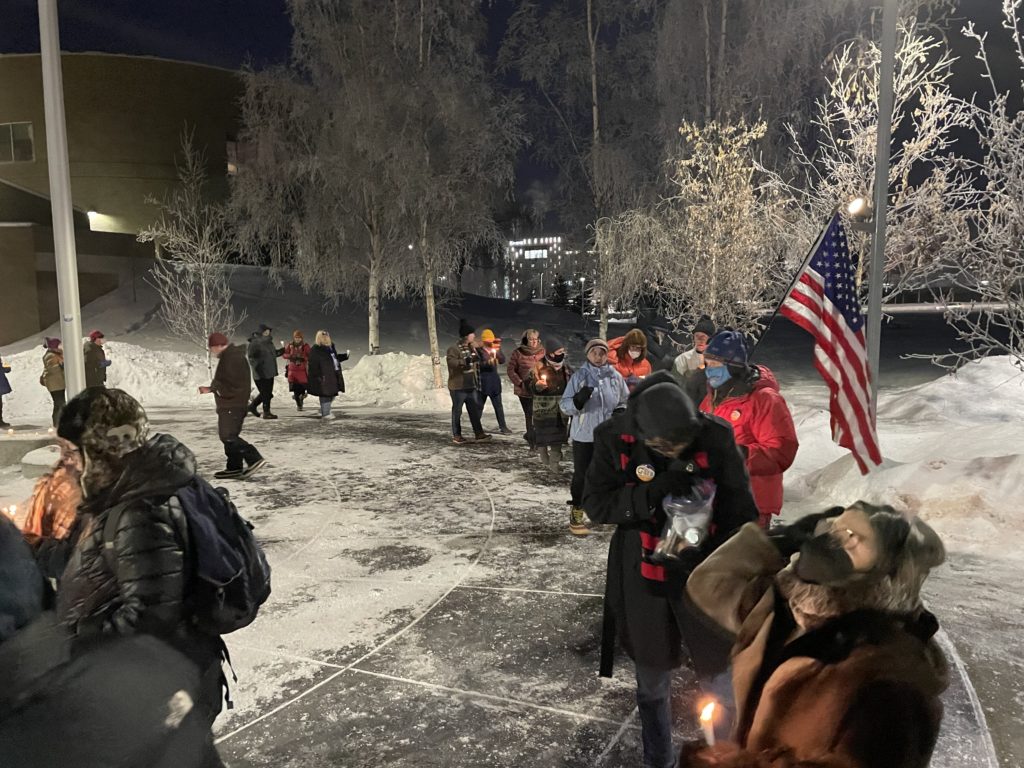
Community members gather around flagpole at Loussac Library holding candles in vigil to defend democracy on anniversary of Jan 6 violent insurrection and Nation's capital

January 6 Vigils Called On Lawmakers To Uphold Democracy

January 7, 2022/in News

Anchorage Community Members Join Nationwide Vigil in Coordination with Over 300 Events Across the Country

Anchorage, AK: In case you missed it, yesterday Stand UP Alaska, The Alaska Center and community organizers held a candlelight vigil at the Loussac Library. The event took place on the one-year anniversary of the violent insurrection at the nation’s capital on January 6th. The vigil was organized in coordination with over 300 events across the nation to give community members a moment of reflection and silence. 

The vigil also served as a starting point to remind people of the continued threats upon democracy in our own communities and ask that leadership pass policies that protect voting rights and ensure the violent attack of democracy we say on January 6, 2021, is never repeated again.

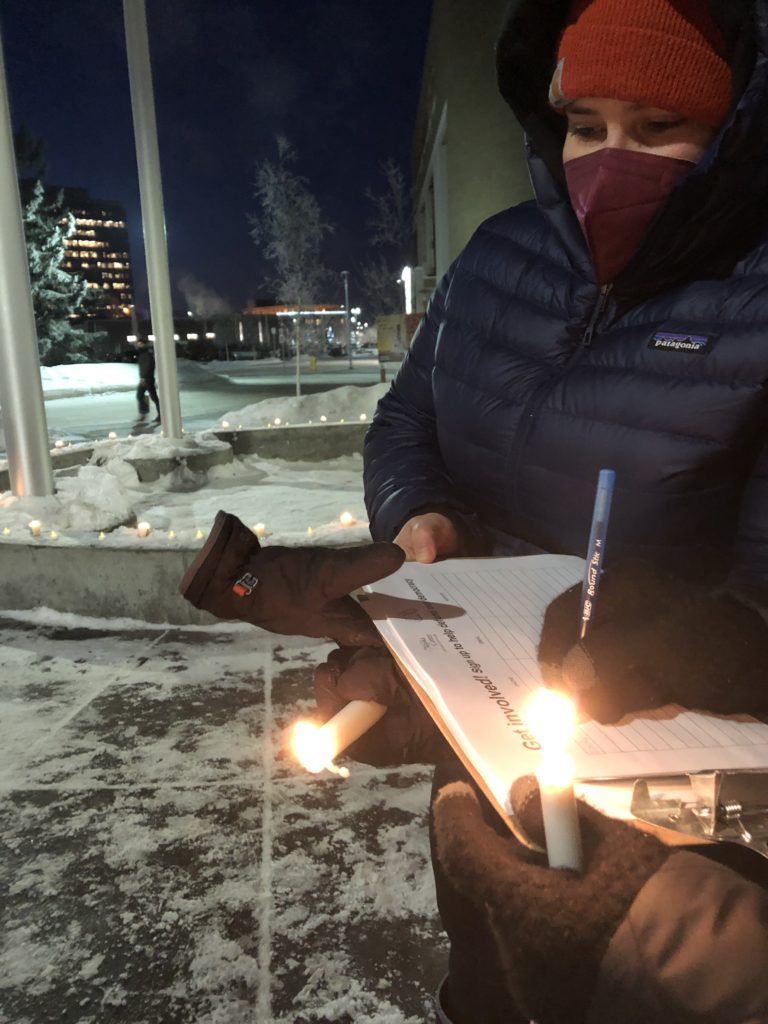
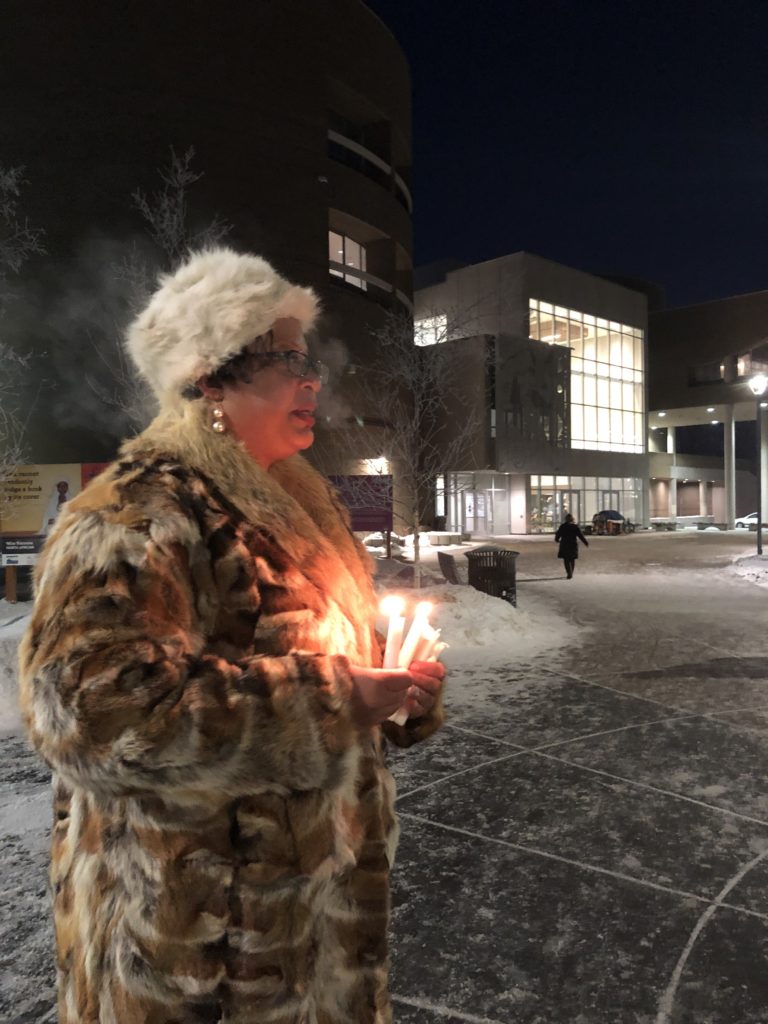
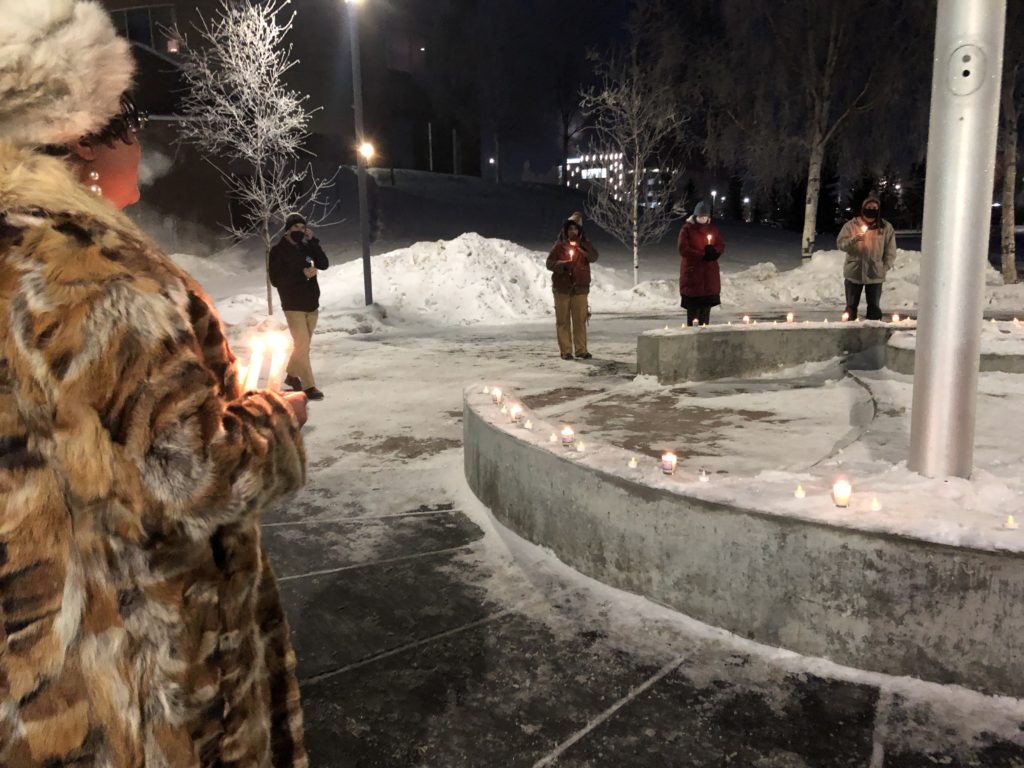
At 5:30 pm a gathering of people sipped hot beverages and held candles around the flagpole at the Loussac Library in the -10 degree weather. Participants stood around the circle of candles and took turns sharing why democracy mattered to them. From mothers to elected officials to retired service members each story was personal and powerful. “I am a recently retired Air Force officer with 24 years of service. I’ve been deployed to Afghanistan and Kyrgyzstan in defense of my country. It was hard many times but it was always worth it because the unique democracy that America has is a beacon to the entire world.” Major Felisa Wilson, US Air Force (Retired) shared why she came out in the cold. “It means a great deal to those who are oppressed in corrupt countries where the citizens have no power, yet, to see America with our steadfast commitment to democracy and the peaceful transfer of power. We as Americans and Alaskans should be united in the shared belief in our democracy and the promise that it holds for our future.”

Polly Carr, Executive Director of The Alaska Center explained her commitment to the vigil,  “A true democracy is one in which all feel safe, respected, and able to participate. On this day, we thank and remember those who stood up for democracy. We stand in solidarity in asking our leaders to support the John Lewis Voting Rights Advancement Act, the Freedom to Vote Act, and the Protecting Our Democracy Act. Here at home, we renew our commitment to protect Alaskans’ voting rights, access, and security.” 

Stand UP Alaska asked participants to light a candle with a hope and a promise–Hope for our amazing democracy and a Promise to stand up for it.

With the temperatures dropping, the presence of the few dozen participants was a powerful testament to this community’s commitment to a safe and fair democracy.

  • Volunteer Kyla Kosednar with The Alaska Center signed up participants to stay connected and engaged around democracy actions moving forward into 2022.
  • Major Felisa Wilson, US Air Force (Retired) began the event asking everyone to think about their personal connection to Democracy.
  • Candles ring the Loussac Library flag pole as community members gather to have a moment of silence for the violent acts on democracy at the Nation’s capital a year ago
  • Community members, volunteers, and elected leaders held candles and walked in silence during Januray 6, remembrance vigil.
https://akcenter.org/wp-content/uploads/2022/01/IMG_4134-scaled-1.jpg 1920 2560 Megan Kelley https://akcenter.org/wp-content/uploads/2025/02/the-alaska-center-with-tag.svg Megan Kelley2022-01-07 20:30:422022-01-07 20:30:42January 6 Vigils Called On Lawmakers To Uphold Democracy
Page 4 of 41234

Categories

  • Accountability (23)
  • AYEA (3)
  • Blog (130)
  • Clean Energy (59)
  • Climate (60)
  • Democracy (62)
  • Leg with Louie (27)
  • Legislative Session (47)
  • News (36)
  • OpEd (3)
  • Press Releases (5)
  • Salmon (15)
  • Uncategorized (9)
  • Volunteer (8)

Archives

3350 Commercial Dr, Ste 101
Anchorage, AK 99501

(907) 274-3621

  • Link to Facebook
  • Link to X
  • Link to Instagram
  • Who We Are
    • Mission
    • Staff
    • Board
    • Careers
  • Our Programs
    • Electing Leaders
    • Climate & Clean Energy
    • Salmon & Clean Water
  • Take Action
    • Donate
    • Volunteer
  • Learn More
    • Hot Takes in a Cold Place
    • Events
  • Our Organizations
    • The Alaska Center Education Fund
    • Trailside Discovery Camp
    • Alaska Youth for Environmental Action

Scroll to top Scroll to top Scroll to top

Support The Alaska Center

Donate Now

$20
$35
$50
$100
$500
$2500