• Who We Are
    • Our Mission
    • Meet Our Staff
    • Meet Our Board
    • The Alaska Center Education Fund
  • Our Programs
    • Electing Leaders
      • Endorsements
    • Climate & Clean Energy
      • Clean Energy Stories
    • Salmon & Clean Water
  • Stay Connected
    • Hot Takes in a Cold Place
    • Become a Volunteer
    • Email Sign Up
    • Events
    • Careers
    • Ways to Give
    • Contact Us
  • Donate
  • Menu Menu

Labor Day: Clean Energy Union Jobs for Climate

September 2, 2022/in Blog, Clean Energy, Climate

[cs_content][cs_element_section _id=”1″ ][cs_element_layout_row _id=”2″ ][cs_element_layout_column _id=”3″ ][cs_element_text _id=”4″ ][cs_content_seo]Hi all,
As we look forward to the upcoming three-day weekend and plan how to spend the time with loved ones and with the land, you wouldn’t be alone if you’re wondering why we have a “Labor Day” at all.
Labor Day is a holiday to commend workers and the labor movement–it came about as a national holiday in the wake of massive labor disputes (the New York Times tells the history much better than we could ever hope to). It’s an excellent chance to thank the labor movement for the benefits we all enjoy today (including wage and work condition standards, an 8-hour work day, the end of child labor, and the list goes on).
Looking forward, there are plans to make beyond the Monday holiday. For starters, in the environmental movement, we need to work on building partnerships with our labor allies.
We’re often told (by some losing far-right candidates in particular) a false narrative about labor and the environment: it’s a pick one question between addressing climate change and supporting the economy. This narrative couldn’t be further from the truth–not only is the clean energy sector growing while traditional oil/gas is declining but creating climate solutions means creating jobs. A Just Transition includes and necessitates unions. The BlueGreen Alliance (an L48 nonprofit uniting the labor and environmental movements) puts it well: “Americans face the dual crises of climate change and increasing economic inequality, and for far too long, we’ve allowed the forces driving both crises to create a wedge between the need for economic security and a living environment. We know this is a false choice—we know that we can and must have both, and we need a bold plan to address both simultaneously.”
There is a massive opportunity for good jobs for Alaskans in creating a clean energy future (this study from the Alaska Climate Alliance does an excellent job, among others). And, at long last, we’re seeing momentum toward harnessing that opportunity from the federal level in the form of the historic Inflation Reduction Act. As we mentioned last week, the IRA’s wage and apprenticeship program requirements mean that the millions of clean energy jobs will meet union-created working standards. It is an essential step in the right direction for the clean energy industry, which often lags behind the standards of living that union workers in the fossil fuel industry have fought for and won over decades.
This Labor Day, we encourage you to support our labor partners. If you’re in Juneau or Fairbanks, please consider joining the festivities! (No events yet in Anchorage–but stay tuned to our labor friends on social – Twitter, Instagram, Facebook)

Fairbanks: Parade starts at 10 AM at Noel Wein Library; Picnic in Pioneer Park 1-4
Juneau: Picnic from 11-2, Sandy Beach Log Cabin

In solidarity,
The Alaska Center

\n\n[/cs_content_seo][/cs_element_layout_column][/cs_element_layout_row][/cs_element_section][cs_element_section _id=”5″ ][cs_element_layout_row _id=”6″ ][cs_element_layout_column _id=”7″ ][cs_element_gap _id=”8″ ][cs_element_button _id=”9″ ][cs_content_seo]More Of Our Blog\n\n[/cs_content_seo][/cs_element_layout_column][/cs_element_layout_row][/cs_element_section][/cs_content]
https://akcenter.org/wp-content/uploads/2022/09/Hot-Takes-Banner.png 400 1200 Megan Kelley https://akcenter.org/wp-content/uploads/2025/02/the-alaska-center-with-tag.svg Megan Kelley2022-09-02 19:27:372022-09-02 19:27:37Labor Day: Clean Energy Union Jobs for Climate

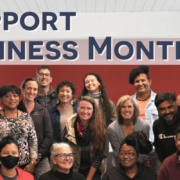
Support Black Business Month

August 26, 2022/in Blog, Clean Energy

August is Black Business Month, a time to celebrate and amplify Black leadership in economic development and entrepreneurship across the country. Today we want to reflect on the importance of amplifying Black leadership in diversifying our economy and helping make the transition from an extractive economy to one that is thriving, just, and sustainable. There can be no climate justice without racial justice.

Across Alaska, we are straining our pocketbooks to pay ever-increasing utilities, food costs, and gas while simultaneously, our climate is in crisis. It has never been more evident: we desperately need to reduce our reliance on fossil fuels, and create safe jobs that grow our workforce, sustain our resources, and help our communities thrive. This transition can range from new regenerative businesses like kelp harvesting, to broad-based investment in renewable energy, to supporting our small local artisans and businesses. However, the policies and projects we move forward with are only part of the solution. In supporting a just transition in Alaska, we also need to consider who is moving this process forward and ensure a diversity of representation in leaders and business owners.
Alaska and our country have been built on exploitation and extraction. Black and marginalized communities have carried an overwhelming environmental burden for centuries. Despite facing disproportionate impacts of the climate, economic, and health crises, Black, Indigenous, and Communities of Color are at the forefront of developing new, innovative, and regenerative economies that support sustainable growth. By supporting this work, we can change the story of what economic development looks like in Alaska and take steps toward economic justice.

There is inspired Black leadership across our state, creating new opportunities for all Alaskans. Check out the Alaska Black Business Directory to support Black businesses in your community.

If you are in Anchorage, we encourage you to attend these amazing events brought to you by Umoja CoWorking and Incubator space and The Alaska Black Chamber of Commerce:

Business Mixer: 6PM August 27 at Umoja Coworking Space “Network, connect, build and learn how Black Chambers help.”
Onsite Childcare provided

Business & Economic Empowerment Retreat: September 17 at Dimond Center Hotel.
“Take some time to recharge and focus on your economic growth and development while hearing from State and National Speakers to include Calvin Martyr, Founder Blackout Coalition.”

To register to attend or sponsor or donate (All amounts help- both monetary and in-kind) check out this link: www.alaskablackbusinessdirectory.com/support

For more info and to get involved in either of these events email [email protected]

A just transition is for all of us, and we can get there by supporting the innovators in the new economy we are building.
The Alaska Center

https://akcenter.org/wp-content/uploads/2022/08/Hot-Takes-Banner-1-1.png 400 1200 Megan Kelley https://akcenter.org/wp-content/uploads/2025/02/the-alaska-center-with-tag.svg Megan Kelley2022-08-26 21:42:412025-01-06 05:17:41Support Black Business Month

A Big Step Forward For Climate

August 19, 2022/in Blog, Clean Energy, Climate

The passage of the most historic climate legislation in U.S. history should give us a moment of hope for the process of lawmaking and Democracy in our country – a brief, sweet moment of exaltation.

Now on the next beat, as heatwaves, wildfires, and floods rage across the globe, we must also take some time to recognize the urgent need for the legislation and the bitter tradeoffs that occurred with the passage of the Inflation Reduction Act (IRA). We are looking at the sacrifice of millions of acres of offshore oil and gas leases in Alaska, the Gulf of Mexico, and elsewhere before federal leases for renewable energy production can be offered. This means, in many instances, especially in Alaska, that coastal and Indigenous lands are Joe Manchin’s tradeoff for the compromise that got the bill through congress. This is a bad compromise, even with the IRA’s historic investment in environmental justice.

On the next beat, it is good to remind ourselves that this is just the starting point for a much larger race to save the planet, defeat racism and protect Democracy. The majority of Americans are with us, and momentum continues toward a just future.
Many of the provisions of the IRA will reverberate in Alaska. The bill contains important apprenticeship and wage requirements that will provide good jobs for Alaskans, and makes sure the clean energy industry catches up to the union-created standards of working that the fossil fuel industry requires.

The IRA substantially increases support for the U.S. Environmental Protection Agency (EPA)’s existing efforts to address methane emissions. It creates a new system of fees that would impose charges on oil and gas infrastructure owners if methane emitted from that infrastructure exceeds specified thresholds. Methane emissions are a significant problem for Alaska’s aging oil and gas infrastructure. Methane is a potent greenhouse gas causing steep increases in global temperatures.

The IRA will extend and create clean energy tax credits, including the existing tax credit for electricity produced from renewable resources, which has been a major benefit to the Solarize Anchorage, Fairbanks, Kenai, and Mat-Su programs. The IRA also creates a new tax credit that rural electric cooperatives like ours on the railbelt in Alaska can apply for to finance new clean energy generation facilities. This will make policies to require utilities to adopt renewable energy generation (like the Renewable Portfolio Standard) more financially achievable in the near term.

The IRA creates a Greenhouse Gas Reduction Fund to be funded at $27 billion over the next decade to better leverage private sector investment and community lenders to build wind, solar, electric vehicle, and energy efficiency projects at the community level. Of that money, $7 billion will go directly to state-operated Green Banks. The legislation to establish an Alaska state Green Bank will likely be re-introduced in Alaska in the 2023 legislative session. (Note that previous legislation proposed to put the Green Bank in the Alaska Industrial Development and Export Authority, an agency that lacks transparency and accountability, so many groups opposed this.) With your help, we can ensure that a state Green Bank in a more trusted agency like the Alaska Housing Finance Corporation becomes a reality.
The transition to clean transportation is facilitated by a $4,000 consumer credit for lower/middle income individuals (i.e., couples making less than $300,000 and individuals $150,000 annually) to buy used electric vehicles and a $7,500 tax credit to buy new electric vehicles. We must advocate with our local utilities and governments to continue the rapid build-out of fast charging stations in Alaska.
With the passage of the IRA, there will be many programs and opportunities for individuals, homeowners, business owners, utilities, local governments, state agencies, Tribes, Native Corporations, and NGOs to save energy costs, decrease emissions, and more in Alaska. We need to work with our elected leaders to ensure that the benefits of the new legislation move forward with equity and at a speed that meets the moment of our climate crisis.

Onward!
The Alaska Center

https://akcenter.org/wp-content/uploads/2022/08/Hot-Takes-Banner-1.png 400 1200 Megan Kelley https://akcenter.org/wp-content/uploads/2025/02/the-alaska-center-with-tag.svg Megan Kelley2022-08-19 18:32:152025-01-06 05:29:08A Big Step Forward For Climate

Climate Action Plans are Community Care

August 12, 2022/in Blog, Clean Energy, Climate

[cs_content][cs_element_section _id=”1″ ][cs_element_layout_row _id=”2″ ][cs_element_layout_column _id=”3″ ][cs_element_text _id=”4″ ][cs_content_seo]Let’s talk about the beloved Climate Action Plan, where everyone from artists, foragers, to bus drivers are climate action experts. At the intersection of immense natural disasters and a lack of systematic preparedness, Climate Action Plans (CAPs) provide a necessary opportunity for neighbors to create the solutions to a crisis they all face.
Every year, the climate crisis clarifies two things: we are collectively unprepared, and our definition of suffering is expanding. We know the thousands of dollars of damage to our homes and cars from the snow and ice. Neighbors are traumatized from the fire evacuations; their empty suitcases are still by the door. Some of us can still hear the rumble of a mudslide burying a part of town. Others are now buying inhalers because the smoke was that bad.
Preparing for a crisis is hard when you’re currently in multiple. However, in these moments, the people suffering have the solutions to the crises. CAPs remind us that we need not know all the answers. Together, we are the solution.
Since the early 2000s, tribal governments and cities across the state came together to create their own Climate Action Plans: Pedro Bay, Homer, Sitka, Anchorage, and Juneau. Fairbanks is next on the roster as their Borough is currently soliciting feedback to draft their Climate Action and Adaptation Plan. Fairbanks Borough residents are encouraged – now needed to join the CAAP Public Summit Event Saturday, August 13, from 10 am – 3 pm at the Borough Chambers. This summit is an opportunity to share the solutions residents need the Borough to implement.

More About Fairbanks’ CAAP >>>
Our leaders need to hear the breadth of the issues residents face. They need to see the wealth of ingenuity our communities have to offer. Without it, the CAAP will fall short.
For Alaskans outside of Fairbanks, you can support this momentum by ensuring we elect climate action champions in the Special, General, Midterm, and local Municipal elections. A CAP’s success relies heavily on climate action-oriented community and government leaders. On August 16, voters can ensure those leaders can help bring climate action to fruition. From voting to testimony, CAPs will require many forms of engagement to be successful. When we do this work together, the future looks bright. These are our communities and these should be our Climate Action Plans. Nothing for us without us.
The Alaska Center

\n\n[/cs_content_seo][/cs_element_layout_column][/cs_element_layout_row][/cs_element_section][cs_element_section _id=”5″ ][cs_element_layout_row _id=”6″ ][cs_element_layout_column _id=”7″ ][cs_element_gap _id=”8″ ][cs_element_button _id=”9″ ][cs_content_seo]More Of Our Blog\n\n[/cs_content_seo][/cs_element_layout_column][/cs_element_layout_row][/cs_element_section][/cs_content]

https://akcenter.org/wp-content/uploads/2022/08/Hot-Takes-Banner-2.png 400 1200 Megan Kelley https://akcenter.org/wp-content/uploads/2025/02/the-alaska-center-with-tag.svg Megan Kelley2022-08-12 23:26:512022-08-12 23:26:51Climate Action Plans are Community Care

A special step towards a better future

July 15, 2022/in Blog, Clean Energy, Climate, Democracy, Salmon

What if Alaskans have the power to change the trajectory of our entire nation? We know that might sound like pie-in-the-sky dreaming or potentially the ramblings of an overly optimistic team committed to our climate future. But honestly, right now, this special election could influence national politics more than you may realize.

Recently we had the chance to vote in our special runoff primary, and we have three candidates to choose from in the August special election. These 3 candidates show us three routes our state could take depending on who rises to the top in the next Ranked Choice election. We could be looking at an extremist conservative candidate with a history of abandoning our state in times of need. We could have an even more extreme candidate who wants to remove bodily autonomy and destroy the EPA. Or we could make another choice, and the seat left open by Don Young could be filled with a progressive candidate who has shown their commitment to protecting our salmon, our communities, and our way of life in Alaska.

Isn’t it about time an Indigenous woman represents our state? Isn’t it about time we let our leaders know that the attacks on our bodily autonomy, environmental protections, and accessible voting are not just decisions Alaskans will sit idly by and watch? Isn’t it time we show the rest of the nation what change can look like and what we need leadership to be?

Sure this special election is for a limited term, but this first special election has the ability to set the stage for an election season where Alaskans say we want progressive leaders to make effective and long-lasting policy decisions for the country. Decisions that can help turn the direction of our climate and our country’s future.

And while this special term is only a few months, whoever gets elected has a much stronger chance of being elected in November. When people turn up to vote, the political infrastructure (campaigns, parties, and political spenders) listens. This is an opportunity for Alaskans to influence bigger and broader elections.

This election is a chance to show up and move the needle for our climate and our communities. When we show up at the polls, we show leadership that we are active and will stay engaged. Our numbers in elections can set the tone, and our leaders can expect to be held accountable for the length of their term.

This year, Alaskans have a lot of elections, and each of them holds the power to make a significant change in our state and our country. This special election can be more special than we may even know. Don’t forget this Sunday is the Voter registration deadline for the special house election.

Keep your eye on the prize, and together we can build a future for all Alaskans.
The Alaska Center

https://akcenter.org/wp-content/uploads/2022/07/Hot-Takes-Banner.png 400 1200 Megan Kelley https://akcenter.org/wp-content/uploads/2025/02/the-alaska-center-with-tag.svg Megan Kelley2022-07-15 18:05:432025-01-06 05:18:42A special step towards a better future

Renewable Portfolio Standards drive innovation and economic development

March 4, 2022/in Blog, Clean Energy, Climate, Leg with Louie, Legislative Session

The role of government in pushing different sectors of the economy to innovate through policy, tax incentives, and funding is well established. While some may oppose a mandatory Renewable Portfolio Standard or RPS policy to push electric utilities to generate or purchase more renewable energy, there is at least a broad historical precedent for the success of the policy.

The benefits of an RPS include economic development and construction and maintenance jobs to create the new generation facilities. For customers, increased renewable energy will put (in the parlance of utility managers) “downward pressure” on the rates we pay per kilowatt-hour. The transmission constraints and bottlenecks will have to be addressed for Alaska’s railbelt to achieve the proposed 80% renewable energy by 2040, and that is a good thing. Transmission upgrades build a bigger freeway for electrons to travel on and build important resiliency in our Alaskan system that’s subject to the weather rigors we know and love, not to mention natural disasters.

Jobs, innovative technologies, likely lower electric rates, and increased transmission system efficiency are not bad things. Considering that transportation and industry are both likely to move toward electric power soon and increase the load on the system as a whole both day and night, and considering the rapid advancement of battery storage to levelize the peaks and valleys of some renewables (as well as old and proven storage technology option of pumped hydro) the concerns of utility managers about renewable energy load variability are surmountable.

Judging by the discussion in the first Senate hearing on the Governors RPS legislation, there seems to be an interest expressed by some committee members in adding micro-nuclear reactors as an option for utilities to meet their RPS goals. This is a non-starter and likely would be opposed even by the Governor. Adding an unproven technology like micro-nuclear reactors into a policy that puts utilities on a time-sensitive course for achieving renewable energy goals could be a hindrance, not to mention the other negatives associated with nuclear (security threat, waste storage, etc.) There is a stand-alone bill pertaining to small nuclear generators, and in a stand-alone bill, it should remain.

Next week, the House Energy Committee will hold two hearings on the RPS bill (HB 301). The first hearing is on Tuesday, March 8 at 10:15 a.m., and the second on Thursday at 10:15 a.m. These will be excellent opportunities for the public to learn more about the RPS. In addition, The Alaska Center will be hosting a webinar on March 10 at noon with House Energy Committee Chair, Representative Calvin Schrage as well as members of the National Renewable Energy Laboratory to discuss what an RPS is, the outlook for the policy this session, and how you can be involved.

If you’re interested in attending here is the registration information!

It is an exciting week ahead for the future of Alaska. Plan to tune in!

https://akcenter.org/wp-content/uploads/2022/03/3.4.22-Hot-Takes-Banner.png 400 1200 Megan Kelley https://akcenter.org/wp-content/uploads/2025/02/the-alaska-center-with-tag.svg Megan Kelley2022-03-04 23:26:562025-01-06 05:11:51Renewable Portfolio Standards drive innovation and economic development

Climate Rights

February 25, 2022/in AYEA, Blog, Clean Energy, Climate, Democracy, Leg with Louie, Legislative Session

[cs_content][cs_element_section _id=”1″ ][cs_element_layout_row _id=”2″ ][cs_element_layout_column _id=”3″ ][cs_element_text _id=”4″ ][cs_content_seo]Do current and future generations have a constitutional right to a safe climate? Sixteen youth plaintiffs filed a constitutional climate lawsuit against their state government in 2017 to argue that we do have such a right. 
In Sagoonick v. State of Alaska, the young plaintiffs assert that Alaska’s fossil fuel energy policy and the State-authorized fossil fuel development and ensuing greenhouse gas emissions that result have caused and contributed to Alaska’s climate crisis. The policies have placed the youth plaintiffs in danger and are harming their health, safety, homes, culture, and Native villages in violation of Alaska’s Constitution.
On January 28, 2022, in a split 3-2 decision, the Alaska Supreme Court ruled against the young plaintiffs. On February 7, the youth plaintiffs filed a petition for rehearing of their case, asking the Court to reconsider its decision and allow their case to go forward. The youth were disappointed about the February 25 denial of their petition, but the fight is far from over. 
State lawmakers have taken note of how close the decision in Sagoonick was. Representative Ben Carpenter, a Republican from the fossil-fuel embracing town of Nikiski, took to the House Floor to make a note of this. Representative Carpenter stated, “this isn’t going away” and that “the implication here…is that State…oil exploration policy…our energy policies…need to be adjusted for an individual’s right to have a safe climate.”  
While some lawmakers may take the close decision as a warning that the state’s petroleum industry is under attack by the youth, Carpenter’s words offered another assessment – sobering to some – that the courts are coming around to the idea of a right to a safe climate.   
Suppose an industry or a policy effectively uses our atmosphere as a dumping place for a chemical byproduct that is enough quantity can put into question the ability of mammals to survive on the planet. In that case, you bet today’s young people should try their level best to stop any additional inputs of that chemical byproduct. The courts are taking note of the danger ahead if we cannot radically decrease the emissions of CO2 and methane into the air. Too much is at stake for this issue to just go away. Expect future lawsuits, legislation, and petitions for rulemaking from the young people of our state and nation.  
Government regulations on industry are in place to protect our health and, ultimately, our individual freedom. The brave youth plaintiffs in Sagoonick v. State of Alaska are fighting for our individual health, individual freedom, and collective health and freedom. These youth are true patriots, and their actions resonate with other youth. Change is coming.
Yours,
The Alaska Center\n\n[/cs_content_seo][/cs_element_layout_column][/cs_element_layout_row][/cs_element_section][cs_element_section _id=”5″ ][cs_element_layout_row _id=”6″ ][cs_element_layout_column _id=”7″ ][cs_element_button _id=”8″ ][cs_content_seo]Voice Your Support on March 1st\n\n[/cs_content_seo][/cs_element_layout_column][/cs_element_layout_row][/cs_element_section][cs_element_section _id=”9″ ][cs_element_layout_row _id=”10″ ][cs_element_layout_column _id=”11″ ][cs_element_button _id=”12″ ][cs_content_seo]Bills To Watch This Week\n\n[/cs_content_seo][/cs_element_layout_column][cs_element_layout_column _id=”13″ ][cs_element_button _id=”14″ ][cs_content_seo]Learn More About Bills This Session\n\n[/cs_content_seo][/cs_element_layout_column][/cs_element_layout_row][/cs_element_section][/cs_content]

https://akcenter.org/wp-content/uploads/2022/02/Hot-Takes-Banner.png 400 1200 Megan Kelley https://akcenter.org/wp-content/uploads/2025/02/the-alaska-center-with-tag.svg Megan Kelley2022-02-25 23:39:372022-02-25 23:39:37Climate Rights

Renewable Energy Goals

February 5, 2022/in Blog, Clean Energy, Climate, Leg with Louie, Legislative Session

[cs_content][cs_element_section _id=”1″ ][cs_element_layout_row _id=”2″ ][cs_element_layout_column _id=”3″ ][cs_element_text _id=”4″ ][cs_content_seo]We don’t often say nice things about our Governor, and that is because we disagree with many of his policies and tactics wholeheartedly. For instance, one of his first moves as Governor was to dismantle the Climate Action Leadership Team that The Alaska Center, Alaska Youth For Environmental Action, numerous partners, and frontline community members worked hard to help establish under the previous administration. However, in the case of a policy that will help our state do its part to combat emissions, we agree wholeheartedly with his proposed Renewable Portfolio Standard introduced today.
What is a Renewable Portfolio Standard, or an RPS as it is commonly called? It is a policy that requires utilities to sell electricity from renewable sources by specific dates or face financial penalties.
In short, an RPS for Alaska will push our electric utilities to accelerate their trajectory away from fossil fuel power generation. It will push utilities toward wind, solar, geothermal, tidal, and hydro projects, either funded by the utility itself or purchased from a company called an Independent Power Producer.
We at The Alaska Center, through programs such as Solarize Anchorage, Solarize MatSu, and Solarize Fairbanks, have actively organized Alaskans in support of increased renewable energy. We have helped elect members to Utility Boards that support increasing renewables. An RPS is something we are confident Alaska utilities can achieve when working together.
SB 179 and HB 301, the Governor’s bills call for regulated electric utilities to achieve benchmark renewable energy goals: 20% by the end of 2025, 30% by 2030, 55% by 2035, and 80% by 2040. Numerous exemptions are designed to accommodate utilities and help them reach the goal. For instance, should a major natural disaster impact a utility’s ability to meet its renewable goal, it would grant an exemption from the non-compliance penalty.
Faced with steadily increasing natural gas prices, many utilities, pushed by their members and their boards of directors, have moved toward renewable energy. The Homer Electric Association has adopted an aggressive goal of achieving 50% renewable energy by 2025. Large batteries are being incorporated into the renewable energy strategy to help balance the variable energy inputs of renewable energy production.
The recent passage of legislation requiring the Regulatory Commission of Alaska to approve an Integrated Resource Plan for the railbelt will help guide the process of integrating an increase in renewable energy and will provide the public and utilities with a process-oriented approach to the construction of new generation facilities. This legislation will help Alaskans avoid an ad-hoc, willy-nilly scramble by individual utilities toward renewable energy projects and instead will set standards and requirements for the projects on a regional basis.
While the Governor’s bills have a long and winding road through the committee process, the fact that this policy has been introduced is a good thing.
In hope,
 The Alaska Center

\n\n[/cs_content_seo][/cs_element_layout_column][/cs_element_layout_row][/cs_element_section][cs_element_section _id=”5″ ][cs_element_layout_row _id=”6″ ][cs_element_layout_column _id=”7″ ][cs_element_button _id=”8″ ][cs_content_seo]Bills To Watch This Week\n\n[/cs_content_seo][/cs_element_layout_column][cs_element_layout_column _id=”9″ ][cs_element_button _id=”10″ ][cs_content_seo]Learn More About Bills This Session\n\n[/cs_content_seo][/cs_element_layout_column][/cs_element_layout_row][/cs_element_section][/cs_content]

https://akcenter.org/wp-content/uploads/2022/02/2.4.22_LegBlog_1200x630.png 630 2100 Megan Kelley https://akcenter.org/wp-content/uploads/2025/02/the-alaska-center-with-tag.svg Megan Kelley2022-02-05 00:10:062022-02-05 00:10:06Renewable Energy Goals

A Look to What is Looming: Legislative Update

January 15, 2022/in Accountability, Blog, Clean Energy, Climate, Legislative Session

The second round of pre-filed bills was released today at approximately 9:32 a.m. There are not many bills compared to historical releases (in 2012, there were 27-second session, second release pre-filed bills – in 2022 there are a mere 13.) A sage observer noted that this might reflect the sense that not a lot of bills are going to move forward in the current legislative environment. It is an election year, after all, and absent a budget stalemate; our weary legislators will be eager to get out of Juneau and get on with their lives (and election campaigns if they want to remain in office).

A light schedule is taking shape for the first week of the session – though there are some points of interest to be sure. For one thing, the Legislative Budget and Audit Committee will be meeting on Martin Luther King Jr. Day to hold a hearing on the firing of the Permanent Fund Director by the Dunleavy-aligned PF Board of Trustees. Questions on rationale are outstanding, and the judgment of the Trustees and the Governor in removing an ED who oversaw the greatest increase in fund value since the inception of the fund needs to be seriously examined.

There are ominous rumblings that in addition to raiding the fund to pay out gigantic permanent fund dividends, the Dunleavy Administration wants to turn the fund itself into an in-state investment bank – an AIDEA* on steroids and growth hormones – pumped like the incredible hulk or a vengeful Nordic god to unleash a wrath of destruction and boondoggle projects across the state.
Oversight is good. Conservative theatrics around election integrity, not so much. However, theatrics are on the plate for the first week of session in Senator Mike Shower’s committee, where they will hear from an array of republican affiliated think tanks, likely teeing up another “Republicans must win every election forever or else the election was illegitimate” bill from Governor Dunleavy.
With so much BS in the world, the word “resilient” strikes a special note. It is about taking the long view, it is about bending, not breaking, caring for our communities in crisis now, and it is about HB 227 from the unflappable Rep. Calvin Schrage. HB 227 seeks to include climate resiliency improvements as eligible for financing under the new Commercial Property Assessed Clean Energy (CPACE) program. CPACE allows commercial property owners to finance clean energy and energy efficiency projects and repay the improvement loan on their property tax bills. It is an innovative program that must be adopted by ordinance in a local government, and so far, Anchorage is the first town to adopt CPACE. However, Juneau and the Mat-Su are also considering adoption.

Climate resilience is an essential consideration as we have seen a raft of disaster declarations this past month from communities impacted by winter storms. Considering what science tells us about our warming planet and its unpredictable weather, our buildings are going to need stronger roofs, fireproofing, better air conditioning, backup renewable energy, battery storage, floodwater management systems, and the list goes on. HB 227 would allow such projects to be financed under the CPACE mechanism. It is a good bill, and it will be heard in the House Energy Committee on Thursday at 10:15 a.m. The future is looking interesting this session. We hear that, as of now, the capitol is open to visitors. We will keep an eye on things and will report back every Friday.

Yours,
The Alaska Center
*AIDEA = Alaska Industrial Development and Export Authority

https://akcenter.org/wp-content/uploads/2022/01/hottakesheads1.png 400 1200 Megan Kelley https://akcenter.org/wp-content/uploads/2025/02/the-alaska-center-with-tag.svg Megan Kelley2022-01-15 00:59:042025-01-06 05:08:26A Look to What is Looming: Legislative Update
Page 6 of 6«‹456

Categories

  • Accountability (23)
  • AYEA (3)
  • Blog (130)
  • Clean Energy (59)
  • Climate (60)
  • Democracy (62)
  • Leg with Louie (27)
  • Legislative Session (47)
  • News (36)
  • OpEd (3)
  • Press Releases (5)
  • Salmon (15)
  • Uncategorized (9)
  • Volunteer (8)

Archives

3350 Commercial Dr, Ste 101
Anchorage, AK 99501

(907) 274-3621

  • Link to Facebook
  • Link to X
  • Link to Instagram
  • Who We Are
    • Mission
    • Staff
    • Board
    • Careers
  • Our Programs
    • Electing Leaders
    • Climate & Clean Energy
    • Salmon & Clean Water
  • Take Action
    • Donate
    • Volunteer
  • Learn More
    • Hot Takes in a Cold Place
    • Events
  • Our Organizations
    • The Alaska Center Education Fund
    • Trailside Discovery Camp
    • Alaska Youth for Environmental Action
Scroll to top Scroll to top Scroll to top

Support The Alaska Center

Donate Now

$20
$35
$50
$100
$500
$2500