• Who We Are
    • Our Mission
    • Meet Our Staff
    • Meet Our Board
    • The Alaska Center Education Fund
  • Our Programs
    • Electing Leaders
      • Endorsements
    • Climate & Clean Energy
      • Clean Energy Stories
    • Salmon & Clean Water
  • Stay Connected
    • Hot Takes in a Cold Place
    • Become a Volunteer
    • Email Sign Up
    • Events
    • Careers
    • Ways to Give
    • Contact Us
  • Donate
  • Menu Menu

Hot Takes In A Cold Place: The Legislative Session Rides Off

May 27, 2022/in Blog, Climate, Democracy, Leg with Louie, Legislative Session

[cs_content][cs_element_section _id=”1″ ][cs_element_layout_row _id=”2″ ][cs_element_layout_column _id=”3″ ][cs_element_text _id=”4″ ][cs_content_seo]Thank you, thank you, thank you to everyone who advocated on bills and budget items this past legislative session. Through your phenomenal effort, we stopped numerous bad bills, settled on a budget that promotes public education and put the brakes on Dunleavy’s move to take over development permitting in sensitive wetland habitats from the EPA.
To recap. Due to your advocacy via letter writing, emails, phone calls, social media pressure, and direct grassroots citizen lobbying, the following bills passed the Legislature and are headed to the Governor’s desk:

Tribal Recognition! HB 123 by Rep. Tiffany Zulkosky passed and will require the State of Alaska to recognize Alaska’s federally recognized tribes. The federal government has a special and unique relationship with tribes that the State formally acknowledges. HB 123 will codify in Alaska law that federally recognized tribes are sovereign governments. It does not change any legal relationship. State recognition of Tribes will honor the first peoples of this land and the historical, economic, and cultural value they bring to the State.
Update to Alaska Sexual Consent Law: HB 325 by Rep. Sara Rasmussen was amended to include HB 5 by Rep. Geran Tarr and changes Alaska’s 40-year-old sexual consent statutes to change how sexual assault can be prosecuted by modernizing the definition of consent.
CPACE expansion: HB 227 legislation by Rep. Calvin Schrage to expand the Commercial Property Assessed Clean Energy statute to include upgrades that improve the climate resiliency of commercial properties.
Broadband Expansion: HB 363 by Rep. Bryce Edgmon establishes the Office of Broadband to prioritize the expansion of high-quality, affordable broadband access to unserved and underserved communities and positions Alaska to receive unprecedented amounts of federal funding for broadband expansion statewide.

On the other side of the coin, you helped stop a slew of bad bills:

SB 39 worked to undermine local control of elections, suppress voting in Alaska, and take away the legal mechanism that adds thousands of new voters annually through Alaska’s Permanent Fund dividend – the automatic voter registration statute.
HB 398 would have made it impossible for Alaskans to protect waters of high ecological value as Tier III waters under the Clean Water Act.
SB 97 sought to give the Department of Natural Resources the power to authorize commercial development on any state land regardless of its status in an area land use plan and to repeal the Recreational River statutes that protect six popular and anadromous Mat-Su rivers: The Little Susitna River, The Deshka River, The Talkeetna River, Lake Creek, Alexander Creek, and The Talachulitna River.
HB 82, a bill to authorize subsurface natural gas drilling and development in Kachemak Bay, which is currently off-limits to oil and gas development.
HB 98 was legislation to decrease citizen participation in the Forest Land Use Plan process for timber sales.

There is a lot to unpack as a legislative session ends. This Memorial Day Weekend, we urge you to take the time to reflect on the positive outcomes of this past session and take heart in the true power of citizen advocacy in our beloved Democracy.\n\n[/cs_content_seo][/cs_element_layout_column][/cs_element_layout_row][/cs_element_section][cs_element_section _id=”5″ ][cs_element_layout_row _id=”6″ ][cs_element_layout_column _id=”7″ ][cs_element_button _id=”8″ ][cs_content_seo]More Bills This Session\n\n[/cs_content_seo][/cs_element_layout_column][/cs_element_layout_row][/cs_element_section][/cs_content]

https://akcenter.org/wp-content/uploads/2022/05/Hot-Takes-Banner-1-1.png 400 1200 Megan Kelley https://akcenter.org/wp-content/uploads/2025/02/the-alaska-center-with-tag.svg Megan Kelley2022-05-27 21:15:302025-01-02 07:26:33Hot Takes In A Cold Place: The Legislative Session Rides Off

What we are fighting for

May 6, 2022/in Blog, Climate, Democracy, Leg with Louie

[cs_content][cs_element_section _id=”1″ ][cs_element_layout_row _id=”2″ ][cs_element_layout_column _id=”3″ ][cs_element_text _id=”4″ ][cs_content_seo]The leaked U.S. Supreme Court opinion on Roe v. Wade rightly kicked off a firestorm of outrage across the United States and Alaska. In Alaska, where the courts have consistently upheld the state’s constitutional right to privacy as a bulwark against laws seeking to overturn reproductive rights, the constitution is in the crosshairs of national and state-level conservatives. The question of whether the state should open up its constitution to a convention and likely significant revisions has been rejected by the voters every ten years it has come up since statehood. For a good reason: too much polarization and too much money are at play for anything to emerge from a constitutional convention exercise except for a partisan, lobbyist-influenced document that is home to the priorities of national groups like the Koch Brothers. A convention-written document would deprive Alaskans of fundamental rights (like the right to privacy) and dismantle tools of societal cohesion such as public education.
In the Alaska State Legislature, bills seeking to reimpose campaign contribution limits face long odds after the Alaska Public Offices Commission voted to strike down rules implementing a $1500 limit per individual. Currently, the money-spend potential is unlimited, which could lead to a campaign season like nothing we have ever seen.  
Bills to both increase and decrease access to voting are crashing against one another as the session nears its terminus in Mid May. Whether S.B. 39 and H.B. 66 are reconciled into a grand bargain package of voting law changes has yet to be seen. We know that voter fraud’s “Big Lie” persists and is at the heart of election restriction proposals. The belief that more Alaskans should have access to the voting franchise is at the heart of arguments to make it easier to register, to vote by mail, and to have your vote count if a simple mistake is made on a by-mail ballot.
The Alaska Center has fought to empower Alaskans for over fifty years. We believe that all Alaskans deserve clean air and water, healthy salmon, personal respect, dignity, safety, and their voices heard in the political process. We have worked this past year to increase access to the tools of a thriving democracy by supporting legislation at the state and federal levels to expand voting access. These are the tools that will help prevent outside corporate interests from taking over the levers of our constitutional system of laws. These are the tools that will protect Alaska’s women’s privacy and medical freedom. These tools will prevent our politics and campaigns from being overrun by millionaires and billionaires.
Join us this Saturday from 5-7 p.m. at the Alaska Native Heritage Center for a COVID-Safe outdoor spring auction where we will celebrate the fight to grow Democracy. This year’s event, Democracy for All, will highlight our work to protect and enhance our Democracy. We believe a true democracy is one in which everyone feels safe, respected, and able to participate in the decisions impacting our communities. 
In solidarity,
Louie Flora
Government Affairs Director
The Alaska Center
Tickets are still available at the door and the silent auction is live now.
This is a COVID-conscious event so please be prepared to present proof of vaccination for yourself and your children.\n\n[/cs_content_seo][/cs_element_layout_column][/cs_element_layout_row][/cs_element_section][cs_element_section _id=”5″ ][cs_element_layout_row _id=”6″ ][cs_element_layout_column _id=”7″ ][cs_element_button _id=”8″ ][cs_content_seo]More Bills This Session\n\n[/cs_content_seo][/cs_element_layout_column][/cs_element_layout_row][/cs_element_section][/cs_content]

https://akcenter.org/wp-content/uploads/2022/05/Hot-Takes-Banner.png 400 1200 Megan Kelley https://akcenter.org/wp-content/uploads/2025/02/the-alaska-center-with-tag.svg Megan Kelley2022-05-06 16:59:402022-05-06 16:59:40What we are fighting for

Earth Day and the Electric Cooperative

April 22, 2022/in Blog, Climate, Leg with Louie, Legislative Session

Tomorrow is Earth Day, a day to reflect on and celebrate our home and our future. Now more than ever, we need to support policies designed to protect our planet and the systems that enable life, including the climate system.

The headlines are full of dire warnings about climate change, and it can feel like an insurmountable problem and that we are well behind the eight ball. Yet, as we face steep challenges, we must also realize that there is hope:

The children and teens of today are perhaps the most engaged and galvanized generation the world has ever seen on the need for climate justice.

The conservation movement is beginning to recognize the value of Indigenous knowledge and work to decolonize their practices while amplifying Indigenous leadership.

The Biden Administration is the most climate-oriented administration we have ever elected, and with enough pressure, we could see him make some dramatic and effective climate commitments.

More and more, the economic argument for renewable energy is now almost irrefutable.

The movement that started Earth Day resounds in all of those who are taking action to protect our climate and our planet: The Alaska Youth for Environmental Action leading climate strikes, the youth plaintiffs in the Sagoonik v. State of Alaska youth climate action lawsuit, advocates for climate policy action at the state and federal level, even those who serve on our electric utility boards and those who advocate with our utility boards to increase the share of renewable energy that utilities produce or purchase. There is hope, and there is action, and both are going to help us as we confront the challenges of climate change head-on.

That is why tomorrow, on Earth Day, The Alaska Center is hosting a Climate, Care, and Community event to highlight the importance of getting involved with your local electric utility entitled “You are your utility.”

Do you pay an electric bill to Matanuska Electric Association, Golden Valley Electric Association, Chugach Electric Association, or Homer Electric Association? If so, that makes you a member-owner of your electric utility! Want to know more about your rights as a member-owner and ways to get involved with local energy democracy? Join us TOMORROW, April 22, at noon to hear from member-owners across the railbelt who stepped up to create change in their utilities!

JOIN THE ZOOM SESSION

More people getting involved with their electric utility leads to a greater diversity of thought and increased transparency and accountability for our electricity providers. We will be relying on these cooperatives increasingly to unlock carbon emission reductions in the transportation and industrial sectors of our economy, so ultimately, our electric cooperatives will have a significant role in decreasing carbon emissions.

It may not be the sexiest way to celebrate Earth Day. Still, we believe that even actions like increased participation in utilities can lead to significant changes in our ongoing fight to protect our beautiful planet.

See you tomorrow,
The Alaska Center

https://akcenter.org/wp-content/uploads/2022/04/earthday.png 400 1200 Megan Kelley https://akcenter.org/wp-content/uploads/2025/02/the-alaska-center-with-tag.svg Megan Kelley2022-04-22 00:55:112025-01-06 05:15:49Earth Day and the Electric Cooperative

A DEC Budget Trap

March 25, 2022/in Accountability, Blog, Climate, Democracy, Legislative Session, Salmon

[cs_content][cs_element_section _id=”1″ ][cs_element_layout_row _id=”2″ ][cs_element_layout_column _id=”3″ ][cs_element_text _id=”4″ ][cs_content_seo]So far, only three states in the United States have assumed primacy for dredge and fill permitting in wetlands. One of those states – Florida – assumed permit primacy in the waning days of the Trump administration. Like Governor Sean Parnell before him, Governor Dunleavy wants Alaska to pay for wetland permitting that is now being paid for by the federal government. The rationale for this proposed forever budget increase paid for by our schools and universities and roads in lean years is that there is an expectation that there will be a return on investment. Through far more relaxed permitting requirements, zero Tribal consultation, and minimal enforcement, Alaska will see a massive influx of Mines.
Governor Dunleavy convinced the state House Finance Committee to add $5 million to the operating budget so that the Alaska Department of Environmental Conservation could hire 32 full-time staff. This means 32 new full-time salaries, benefits, travel budgets, etc., to create a state wetland dredge and fill program that is equivalent to the program already paid for by the federal EPA. Perhaps the Dunleavy administration is going to pay these new workers peanuts. $5 million is a far cry from the cost estimate in 2013 when Governor Parnell foisted primacy on the Legislature. At that time – EPA had 49 positions administering its permitting program at a cost of $7.9 million in 2013 dollars. You don’t have to read a crystal ball to see how this will play out for Alaska should the Senate adopt the House numbers and we start a wetland permitting program. You can bet that if the Legislature agrees to this initial $5 million allocation, we should more realistically expect to pay at least a 10 million dollar figure, subject to inflation, moving forward in countless budget years.
It will require more money than was described initially by a less than trustable Dunleavy Administration and the former Pebble spokesperson running DEC now – you can bank on that as a fact. It will lead to costly litigation for the state – bank on that. It will be a messy and costly tug of war between the state and federal government–look at what happened in Florida.
In Florida, with a Governor who is predictably combative with the federal government, there is significant disagreement on the scope of what are to be considered wetlands. Florida continues to apply the Trump EPA version, a predictably and significantly restrictive definition. This definition (Waters Of The United States – WOTUS) was invalidated by a district court opinion, and the Biden EPA is applying a pre-2015 version of WOTUS to which Florida disagrees. Alaska has 65% of the nation’s wetlands and a Governor who loves nothing more than to spend state money fighting the Feds, so the Legislature should anticipate this allocation to DEC will also kick off endless increases in “Statehood Defense” spending. 
The return on investment for paying to take over wetland permitting is likely to be this: 1. Good grandstanding politics for Governors. 2. Mine development plans that factor in lax state permitting and no Tribal consultation, so Mines are freer to destroy salmon habitat, and 3. Jobs–mainly for State attorneys paid out of the General Fund to fight with the EPA. That sounds like a great deal!
The State Senate should say No to this allocation of our money.
Sincerely,
The Alaska Center\n\n[/cs_content_seo][/cs_element_layout_column][/cs_element_layout_row][/cs_element_section][cs_element_section _id=”5″ ][cs_element_layout_row _id=”6″ ][cs_element_layout_column _id=”7″ ][cs_element_button _id=”8″ ][cs_content_seo]Bills to Watch This Week\n\n[/cs_content_seo][/cs_element_layout_column][cs_element_layout_column _id=”9″ ][cs_element_button _id=”10″ ][cs_content_seo]More Bills This Session\n\n[/cs_content_seo][/cs_element_layout_column][/cs_element_layout_row][/cs_element_section][/cs_content]

https://akcenter.org/wp-content/uploads/2022/03/DECblogheader.png 400 1200 Megan Kelley https://akcenter.org/wp-content/uploads/2025/02/the-alaska-center-with-tag.svg Megan Kelley2022-03-25 21:22:442022-03-25 21:22:44A DEC Budget Trap

Renewable Portfolio Standards drive innovation and economic development

March 4, 2022/in Blog, Clean Energy, Climate, Leg with Louie, Legislative Session

The role of government in pushing different sectors of the economy to innovate through policy, tax incentives, and funding is well established. While some may oppose a mandatory Renewable Portfolio Standard or RPS policy to push electric utilities to generate or purchase more renewable energy, there is at least a broad historical precedent for the success of the policy.

The benefits of an RPS include economic development and construction and maintenance jobs to create the new generation facilities. For customers, increased renewable energy will put (in the parlance of utility managers) “downward pressure” on the rates we pay per kilowatt-hour. The transmission constraints and bottlenecks will have to be addressed for Alaska’s railbelt to achieve the proposed 80% renewable energy by 2040, and that is a good thing. Transmission upgrades build a bigger freeway for electrons to travel on and build important resiliency in our Alaskan system that’s subject to the weather rigors we know and love, not to mention natural disasters.

Jobs, innovative technologies, likely lower electric rates, and increased transmission system efficiency are not bad things. Considering that transportation and industry are both likely to move toward electric power soon and increase the load on the system as a whole both day and night, and considering the rapid advancement of battery storage to levelize the peaks and valleys of some renewables (as well as old and proven storage technology option of pumped hydro) the concerns of utility managers about renewable energy load variability are surmountable.

Judging by the discussion in the first Senate hearing on the Governors RPS legislation, there seems to be an interest expressed by some committee members in adding micro-nuclear reactors as an option for utilities to meet their RPS goals. This is a non-starter and likely would be opposed even by the Governor. Adding an unproven technology like micro-nuclear reactors into a policy that puts utilities on a time-sensitive course for achieving renewable energy goals could be a hindrance, not to mention the other negatives associated with nuclear (security threat, waste storage, etc.) There is a stand-alone bill pertaining to small nuclear generators, and in a stand-alone bill, it should remain.

Next week, the House Energy Committee will hold two hearings on the RPS bill (HB 301). The first hearing is on Tuesday, March 8 at 10:15 a.m., and the second on Thursday at 10:15 a.m. These will be excellent opportunities for the public to learn more about the RPS. In addition, The Alaska Center will be hosting a webinar on March 10 at noon with House Energy Committee Chair, Representative Calvin Schrage as well as members of the National Renewable Energy Laboratory to discuss what an RPS is, the outlook for the policy this session, and how you can be involved.

If you’re interested in attending here is the registration information!

It is an exciting week ahead for the future of Alaska. Plan to tune in!

https://akcenter.org/wp-content/uploads/2022/03/3.4.22-Hot-Takes-Banner.png 400 1200 Megan Kelley https://akcenter.org/wp-content/uploads/2025/02/the-alaska-center-with-tag.svg Megan Kelley2022-03-04 23:26:562025-01-06 05:11:51Renewable Portfolio Standards drive innovation and economic development

Climate Rights

February 25, 2022/in AYEA, Blog, Clean Energy, Climate, Democracy, Leg with Louie, Legislative Session

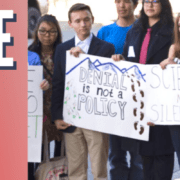
[cs_content][cs_element_section _id=”1″ ][cs_element_layout_row _id=”2″ ][cs_element_layout_column _id=”3″ ][cs_element_text _id=”4″ ][cs_content_seo]Do current and future generations have a constitutional right to a safe climate? Sixteen youth plaintiffs filed a constitutional climate lawsuit against their state government in 2017 to argue that we do have such a right. 
In Sagoonick v. State of Alaska, the young plaintiffs assert that Alaska’s fossil fuel energy policy and the State-authorized fossil fuel development and ensuing greenhouse gas emissions that result have caused and contributed to Alaska’s climate crisis. The policies have placed the youth plaintiffs in danger and are harming their health, safety, homes, culture, and Native villages in violation of Alaska’s Constitution.
On January 28, 2022, in a split 3-2 decision, the Alaska Supreme Court ruled against the young plaintiffs. On February 7, the youth plaintiffs filed a petition for rehearing of their case, asking the Court to reconsider its decision and allow their case to go forward. The youth were disappointed about the February 25 denial of their petition, but the fight is far from over. 
State lawmakers have taken note of how close the decision in Sagoonick was. Representative Ben Carpenter, a Republican from the fossil-fuel embracing town of Nikiski, took to the House Floor to make a note of this. Representative Carpenter stated, “this isn’t going away” and that “the implication here…is that State…oil exploration policy…our energy policies…need to be adjusted for an individual’s right to have a safe climate.”  
While some lawmakers may take the close decision as a warning that the state’s petroleum industry is under attack by the youth, Carpenter’s words offered another assessment – sobering to some – that the courts are coming around to the idea of a right to a safe climate.   
Suppose an industry or a policy effectively uses our atmosphere as a dumping place for a chemical byproduct that is enough quantity can put into question the ability of mammals to survive on the planet. In that case, you bet today’s young people should try their level best to stop any additional inputs of that chemical byproduct. The courts are taking note of the danger ahead if we cannot radically decrease the emissions of CO2 and methane into the air. Too much is at stake for this issue to just go away. Expect future lawsuits, legislation, and petitions for rulemaking from the young people of our state and nation.  
Government regulations on industry are in place to protect our health and, ultimately, our individual freedom. The brave youth plaintiffs in Sagoonick v. State of Alaska are fighting for our individual health, individual freedom, and collective health and freedom. These youth are true patriots, and their actions resonate with other youth. Change is coming.
Yours,
The Alaska Center\n\n[/cs_content_seo][/cs_element_layout_column][/cs_element_layout_row][/cs_element_section][cs_element_section _id=”5″ ][cs_element_layout_row _id=”6″ ][cs_element_layout_column _id=”7″ ][cs_element_button _id=”8″ ][cs_content_seo]Voice Your Support on March 1st\n\n[/cs_content_seo][/cs_element_layout_column][/cs_element_layout_row][/cs_element_section][cs_element_section _id=”9″ ][cs_element_layout_row _id=”10″ ][cs_element_layout_column _id=”11″ ][cs_element_button _id=”12″ ][cs_content_seo]Bills To Watch This Week\n\n[/cs_content_seo][/cs_element_layout_column][cs_element_layout_column _id=”13″ ][cs_element_button _id=”14″ ][cs_content_seo]Learn More About Bills This Session\n\n[/cs_content_seo][/cs_element_layout_column][/cs_element_layout_row][/cs_element_section][/cs_content]
https://akcenter.org/wp-content/uploads/2022/02/Hot-Takes-Banner.png 400 1200 Megan Kelley https://akcenter.org/wp-content/uploads/2025/02/the-alaska-center-with-tag.svg Megan Kelley2022-02-25 23:39:372022-02-25 23:39:37Climate Rights

Renewable Energy Goals

February 5, 2022/in Blog, Clean Energy, Climate, Leg with Louie, Legislative Session

[cs_content][cs_element_section _id=”1″ ][cs_element_layout_row _id=”2″ ][cs_element_layout_column _id=”3″ ][cs_element_text _id=”4″ ][cs_content_seo]We don’t often say nice things about our Governor, and that is because we disagree with many of his policies and tactics wholeheartedly. For instance, one of his first moves as Governor was to dismantle the Climate Action Leadership Team that The Alaska Center, Alaska Youth For Environmental Action, numerous partners, and frontline community members worked hard to help establish under the previous administration. However, in the case of a policy that will help our state do its part to combat emissions, we agree wholeheartedly with his proposed Renewable Portfolio Standard introduced today.
What is a Renewable Portfolio Standard, or an RPS as it is commonly called? It is a policy that requires utilities to sell electricity from renewable sources by specific dates or face financial penalties.
In short, an RPS for Alaska will push our electric utilities to accelerate their trajectory away from fossil fuel power generation. It will push utilities toward wind, solar, geothermal, tidal, and hydro projects, either funded by the utility itself or purchased from a company called an Independent Power Producer.
We at The Alaska Center, through programs such as Solarize Anchorage, Solarize MatSu, and Solarize Fairbanks, have actively organized Alaskans in support of increased renewable energy. We have helped elect members to Utility Boards that support increasing renewables. An RPS is something we are confident Alaska utilities can achieve when working together.
SB 179 and HB 301, the Governor’s bills call for regulated electric utilities to achieve benchmark renewable energy goals: 20% by the end of 2025, 30% by 2030, 55% by 2035, and 80% by 2040. Numerous exemptions are designed to accommodate utilities and help them reach the goal. For instance, should a major natural disaster impact a utility’s ability to meet its renewable goal, it would grant an exemption from the non-compliance penalty.
Faced with steadily increasing natural gas prices, many utilities, pushed by their members and their boards of directors, have moved toward renewable energy. The Homer Electric Association has adopted an aggressive goal of achieving 50% renewable energy by 2025. Large batteries are being incorporated into the renewable energy strategy to help balance the variable energy inputs of renewable energy production.
The recent passage of legislation requiring the Regulatory Commission of Alaska to approve an Integrated Resource Plan for the railbelt will help guide the process of integrating an increase in renewable energy and will provide the public and utilities with a process-oriented approach to the construction of new generation facilities. This legislation will help Alaskans avoid an ad-hoc, willy-nilly scramble by individual utilities toward renewable energy projects and instead will set standards and requirements for the projects on a regional basis.
While the Governor’s bills have a long and winding road through the committee process, the fact that this policy has been introduced is a good thing.
In hope,
 The Alaska Center

\n\n[/cs_content_seo][/cs_element_layout_column][/cs_element_layout_row][/cs_element_section][cs_element_section _id=”5″ ][cs_element_layout_row _id=”6″ ][cs_element_layout_column _id=”7″ ][cs_element_button _id=”8″ ][cs_content_seo]Bills To Watch This Week\n\n[/cs_content_seo][/cs_element_layout_column][cs_element_layout_column _id=”9″ ][cs_element_button _id=”10″ ][cs_content_seo]Learn More About Bills This Session\n\n[/cs_content_seo][/cs_element_layout_column][/cs_element_layout_row][/cs_element_section][/cs_content]

https://akcenter.org/wp-content/uploads/2022/02/2.4.22_LegBlog_1200x630.png 630 2100 Megan Kelley https://akcenter.org/wp-content/uploads/2025/02/the-alaska-center-with-tag.svg Megan Kelley2022-02-05 00:10:062022-02-05 00:10:06Renewable Energy Goals

State of State Predictions

January 22, 2022/in Accountability, Blog, Climate, Democracy, Legislative Session

The Governor’s State of The State Address is next week (7 p.m. on Tuesday, January 25). It is sure to contain grievances about the Federal Government, excitement about mineral resource development projects in Alaska, and a dash of “Election Integrity” talk. It will maybe/probably contain a few lines about renewable energy, fisheries, Alaska’s strategic economic and military location, and “greatest resource is the people of AK” platitudes, etc., to put a bow on it.

It is becoming clear through various releases of information that the Governor is actively lying about his role in the firing of the Permanent Fund E.D. and that the firing was political retribution as Ms. Rodell did not grant the Governor’s cherished overdraw of the Permanent Fund earnings reserve money – we expect that this will not be a part of the State of the State, and hey, it might cause the Gov. to not throw jabs during the speech at the Legislature on the issue of the big PFD never being approved by lawmakers.

With the new Ranked Choice Voting law in place, the Governor is free to pick a suitable running mate and facing at least two known challenges from the far-right flank in his bid for Re-election. Dunleavy made the choice to dump Lt. Governor Kevin Meyer from the ticket despite his faithful dealings with this evolving fiasco of an administration. There is a slight, outside, chance that the Governor will say some nice things about the Lt. Governor, but we would not hold our breath. After all, the Lt. Gov has defended the 2020 election in Alaska, which the far-right know with great certainty was “stolen.”

State Medical officer Dr. Anne Zink, also ever faithful in her dealings with the Dunleavy Administration, is under attack by supporters of Dunleavy and his challenger, political nobody Rep. Chris Kurka who has the firing of Dr. Zink as part of his campaign platform. If the Governor wanted to appear that he has a backbone, he would go strong in defense of Dr. Zink in his speech. To date, his defense has been very muted and wimpy as her credibility is attacked and she is personally threatened.

While he is defending Alaskans from attack by other Alaskans (seemingly something a Governor should do), he might include in his speech an apology to the former Assistant Attorney General, Elizabeth Bakalar. She was targeted with toxic animus and threats of all varieties from far-right Dunleavy supporters after she took legal action against her illegal firing by Dunleavy. Bakalar won on most grounds in federal court this past week. The state will be on the hook for damages. The action by the administration was wrong and will cost the state. Now that the case is settled, it is time to clear the air and address the cost to the state and (former) state workers like Bakalar in the State of the State.

Federal spending on Infrastructure will cushion the reality of our state’s structural budget deficit. Federal COVID relief has and will continue to protect vulnerable Alaskans and help prop up the economy. We hope the Governor does not adopt a posture of holding his hand out while flipping the bird to the Feds with his other hand. However, this is likely, since this particular brand of complaint has been refined and reworked in speeches since statehood and before.

We anticipate that there will be few surprises and many missed opportunities in Tuesday night’s address. We remain open to the possibility of shock, reflection, reconciliation, and rejuvenation. Wouldn’t that be something?

Yours,
The Alaska Center Team

https://akcenter.org/wp-content/uploads/2022/01/stateofstateFB2022.png 630 1200 Megan Kelley https://akcenter.org/wp-content/uploads/2025/02/the-alaska-center-with-tag.svg Megan Kelley2022-01-22 01:03:062025-01-06 05:20:04State of State Predictions

A Look to What is Looming: Legislative Update

January 15, 2022/in Accountability, Blog, Clean Energy, Climate, Legislative Session

The second round of pre-filed bills was released today at approximately 9:32 a.m. There are not many bills compared to historical releases (in 2012, there were 27-second session, second release pre-filed bills – in 2022 there are a mere 13.) A sage observer noted that this might reflect the sense that not a lot of bills are going to move forward in the current legislative environment. It is an election year, after all, and absent a budget stalemate; our weary legislators will be eager to get out of Juneau and get on with their lives (and election campaigns if they want to remain in office).

A light schedule is taking shape for the first week of the session – though there are some points of interest to be sure. For one thing, the Legislative Budget and Audit Committee will be meeting on Martin Luther King Jr. Day to hold a hearing on the firing of the Permanent Fund Director by the Dunleavy-aligned PF Board of Trustees. Questions on rationale are outstanding, and the judgment of the Trustees and the Governor in removing an ED who oversaw the greatest increase in fund value since the inception of the fund needs to be seriously examined.

There are ominous rumblings that in addition to raiding the fund to pay out gigantic permanent fund dividends, the Dunleavy Administration wants to turn the fund itself into an in-state investment bank – an AIDEA* on steroids and growth hormones – pumped like the incredible hulk or a vengeful Nordic god to unleash a wrath of destruction and boondoggle projects across the state.
Oversight is good. Conservative theatrics around election integrity, not so much. However, theatrics are on the plate for the first week of session in Senator Mike Shower’s committee, where they will hear from an array of republican affiliated think tanks, likely teeing up another “Republicans must win every election forever or else the election was illegitimate” bill from Governor Dunleavy.
With so much BS in the world, the word “resilient” strikes a special note. It is about taking the long view, it is about bending, not breaking, caring for our communities in crisis now, and it is about HB 227 from the unflappable Rep. Calvin Schrage. HB 227 seeks to include climate resiliency improvements as eligible for financing under the new Commercial Property Assessed Clean Energy (CPACE) program. CPACE allows commercial property owners to finance clean energy and energy efficiency projects and repay the improvement loan on their property tax bills. It is an innovative program that must be adopted by ordinance in a local government, and so far, Anchorage is the first town to adopt CPACE. However, Juneau and the Mat-Su are also considering adoption.

Climate resilience is an essential consideration as we have seen a raft of disaster declarations this past month from communities impacted by winter storms. Considering what science tells us about our warming planet and its unpredictable weather, our buildings are going to need stronger roofs, fireproofing, better air conditioning, backup renewable energy, battery storage, floodwater management systems, and the list goes on. HB 227 would allow such projects to be financed under the CPACE mechanism. It is a good bill, and it will be heard in the House Energy Committee on Thursday at 10:15 a.m. The future is looking interesting this session. We hear that, as of now, the capitol is open to visitors. We will keep an eye on things and will report back every Friday.

Yours,
The Alaska Center
*AIDEA = Alaska Industrial Development and Export Authority

https://akcenter.org/wp-content/uploads/2022/01/hottakesheads1.png 400 1200 Megan Kelley https://akcenter.org/wp-content/uploads/2025/02/the-alaska-center-with-tag.svg Megan Kelley2022-01-15 00:59:042025-01-06 05:08:26A Look to What is Looming: Legislative Update

New Year, New Session 2022

January 7, 2022/in Blog, Climate, Democracy

Happy New Year and new Legislative Session from The Alaska Center. We anticipate both opportunity and struggle in the year ahead, another year in the lifetime work of protecting and nurturing our Democracy and saving our home from the ravages of climate change.  

The 2022 legislative session will likely be consumed with election-year grandstanding antics. We already see some of this in the move by the Dunleavy Administration to remove the more or less moderate and politically seasoned Lt. Governor Kevin Meyer as a running mate – due in part to his honesty about the Division of Elections efforts in the 2021 elections and the fact that they are considered the most secure and legitimate in history.  

This runs counter to partisan lies about elections that exposed much of the Right to be in a feverish tilt toward authoritarianism. Though it likely was not the Lt. Governor’s decision to leave the ticket, it is good for his legacy that he will not be made to bow in fealty to the dangerous bullpucky of the new Right. The Governor will be introducing new election legislation soon, and we will be monitoring it closely for poison pills relating to voting rights and election subversion.  

As we recognized the one-year anniversary of the bloody insurrection of January 6, 2021, it is clear that we can never back down from the effort to halt legislation that would erode democratic norms. We all must work as if the future of the country depends on it to end the politics that ultimately seek to facilitate violence between Americans.   

The list of pre-filed legislation for the 2022 legislative session hit the streets today. You can peruse the full list here. A second pre-file release is scheduled for next Friday, January 14, ahead of the convening of the legislature on January 18. There is no special magic to a pre-filed bill though it gives the sponsor a chance to introduce and develop an argument for the idea and get it into the public sphere in the relative quiet before the start of the session.   

We look forward to communicating with you after the second pre-file regarding our analysis of those bills that The Alaska Center supports and opposes in the raft of the pre-files. Lawmakers and staff are headed to Juneau by land, sea, and air as we speak. We wish them safe passage and a healthy session.

Here is to the future.

The Alaska Center Team

PS: We are evolving our blog this year to include the Legislature and beyond. We will still be a resource for legislative updates but are inviting more voices in and will be providing more insights into the way we can all engage to defend our democracy, push for proactive climate policies and ensure Alaskans are at the decision-making table.

https://akcenter.org/wp-content/uploads/2022/01/blog-jan7-2022update.png 400 1200 Megan Kelley https://akcenter.org/wp-content/uploads/2025/02/the-alaska-center-with-tag.svg Megan Kelley2022-01-07 22:31:512022-01-07 22:31:51New Year, New Session 2022
Page 6 of 6«‹456

Categories

  • Accountability (23)
  • AYEA (3)
  • Blog (130)
  • Clean Energy (59)
  • Climate (60)
  • Democracy (62)
  • Leg with Louie (27)
  • Legislative Session (47)
  • News (36)
  • OpEd (3)
  • Press Releases (5)
  • Salmon (15)
  • Uncategorized (9)
  • Volunteer (8)

Archives

3350 Commercial Dr, Ste 101
Anchorage, AK 99501

(907) 274-3621

  • Link to Facebook
  • Link to X
  • Link to Instagram
  • Who We Are
    • Mission
    • Staff
    • Board
    • Careers
  • Our Programs
    • Electing Leaders
    • Climate & Clean Energy
    • Salmon & Clean Water
  • Take Action
    • Donate
    • Volunteer
  • Learn More
    • Hot Takes in a Cold Place
    • Events
  • Our Organizations
    • The Alaska Center Education Fund
    • Trailside Discovery Camp
    • Alaska Youth for Environmental Action

Scroll to top Scroll to top Scroll to top

Support The Alaska Center

Donate Now

$20
$35
$50
$100
$500
$2500